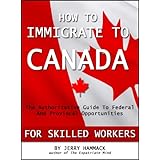
My eBook, How To Immigrate To Canada For Skilled Workers: The Authoritative Guide To Federal And Provincial Opportunities is available now on Amazon and other online retailers. Get your copy of the essential guide to Skilled Worker class applications today!

For Kindle
For iPad/iPhone
For Nook
For Kobo
For Sony eReader

Also available is my new eBook, "How To Immigrate To Canada In The Family Class: The Authoritative Guide Including Québec And Super Visa Opportunities". Get it at Amazon or the other e-retailers noted above.
Showing posts with label Economic immigration. Show all posts

Wednesday, October 25, 2017

From My Visa Source - 13 Amazing Facts About Permanent Citizenship (Guest Post)


Becoming a Canadian Citizen is a Lengthy Process

After having acquired a Canadian Permanent Residence (PR), one must wait 5 years before being eligible for Canadian Citizenship. However, for PR’s to qualify, they need to have remained on Canadian soil for 3 years out of the 5. For those who want to get their Canadian Citizenship as quickly as possible, this can seem like a lengthy process.

Canadian Immigration Laws are Strict Yet Necessary
Due to the Canadian Government wanting to build a secure economy as well as a welcoming community, many rules have been put into motion concerning Canadian Citizenship. PR’s must prove their loyalty to Canada by building a foundation on Canadian soil during their 5-year interim.

Permanent Residents Face Longer Wait Periods
PR’s must wait 5 years before being eligible for Canadian Citizenship, despite having already bought a house, started a business, studied, or worked in a promising field in Canada.

Permanent Residents Need to Pass the Canadian Citizenship Test
A PR could potentially fulfill all the requirements for their Canadian Citizenship and still be denied. This is because PR’s need to pass the Canadian Citizenship Test (CCT) to be deemed a true Canadian Citizen.

The Canadian Government Has Approved Bill C6 
On June 19, 2017, the Canadian government passed Bill C6. Effective as of Sept 21, 2017, this benefits PR’s by reducing the “4-out-of-6 rule” to the “3-out-of-5” rule, vastly accelerating the citizenship acquisition process!

Get Accustomed With New Regulations 
Ongoing, PR’s can benefit greatly by studying the Canadian Citizenship process or hiring an Immigration lawyer who is familiar with the recent changes in Immigration Law.


Here are 13 facts about Canadian citizenship that you might find interesting and helpful:


  1. Bill C6 can help you receive your Canadian permanent citizenship at a faster rate.
  2. Once you obtain your permanent residence status it can never expire.
  3. Committing a crime that lands you in jail for longer than 2 years can result in deportation and the revocation of your Canadian permanent citizenship.
  4. While your permanent citizenship cannot expire, your permanent resident card can. This documentation must be renewed every 5 years.
  5. The first mention of Canadian Citizenship Act in legislation was in the 1910 Immigration Act.
  6. Canada’s Citizenship Act became law on January 1, 1947.
  7. Most Canada’s immigrants come from Asia and the Pacific. These groups contribute considerably to the “family and work category” pertaining to the Canadian Visa. 
  8. The sooner a PR takes the CCT, the more likely they are to pass it.
  9. If you fail the CCT, you may be allowed a retake depending on your criteria.
  10. Prior to the Canadian Citizenship Act, the legal status of those living in Canada since birth was “British subjects”.
  11. Prime Minister William Lyon Mackenzie King was the first to be awarded a Canadian citizenship certificate.
  12. In 1958, Conservative Prime Minister John Diefenbaker abolished revocation of citizenship for treason.
  13. Between 2003 and 2013, 1.9 million newcomers have become Canadian citizens.


Are you in the process of becoming a Canadian citizen? Are you ready for that final step? Contact your Immigration Lawyer today at https://www.myvisasource.com/

Wednesday, February 01, 2017

Choose Canada

It's been quite awhile since I wrote here. Some might say it's the natural cycle of blogs that they can only be sustained for X-number of years, or that once the mode of expression has served its purpose or run its course that it's natural it should fade into the background.

These things are true of The Expatriate Mind. I started the blog to document my immigration from the US to Canada,with all its emotional ups and downs, the events along the way and the current events that put the journey into context.

The entirety of the journey is nearly complete as I will be filing papers for my citizenship in a matter of months. I'll be sure and let you know about that process as it occurs, and the steps along the way. It's exciting to think that I will be a Canadian in the very near future.

But why I am writing tonight is because for now, I remain an American permanent resident of Canada and I want to communicate to anyone out there who is looking for make a new life for themselves in North America to take the US off of your radar and instead, choose Canada.

For at least the next four years, the US will be lead by Donald Trump - a fascist, racist, misogynist who is supported by his enablers and henchmen in government and the general population. The characteristics Trump exhibits are not those of all Americans by far, but his control of the government means that immigrating to the US will be fraught with difficulty as he molds policies to please his fascist, racist supporters and fills his bureaucracy with those who share his world view.

Canada welcomes you. In Canada, multiculturalism is written into the constitution:

Equality before and under law and equal protection and benefit of law

  • 15. (1) Every individual is equal before and under the law and has the right to the equal protection and equal benefit of the law without discrimination and, in particular, without discrimination based on race, national or ethnic origin, colour, religion, sex, age or mental or physical disability.
  • Marginal note:Affirmative action programs
    (2) Subsection (1) does not preclude any law, program or activity that has as its object the amelioration of conditions of disadvantaged individuals or groups including those that are disadvantaged because of race, national or ethnic origin, colour, religion, sex, age or mental or physical disability. (84)
and 
Multicultural heritage
27. This Charter shall be interpreted in a manner consistent with the preservation and enhancement of the multicultural heritage of Canadians.

There is no question that the contributions made by all who choose Canada as their home is welcomed and appreciated.

While immigration to Canada is not easy - economic immigrants must be matched with demand for their skills, family class immigration has limits in the range of reunification it offers: There are still 60 different programs under which you might immigrate to Canada.

I love this country and am so grateful to have the opportunity to live here. It's been a little over five years now since I landed, and while it has not been easy, coming to Canada to be with the woman I love is one of the best decisions I have ever made.

As an American I can tell you that the US has always been a country that believes in "economic Darwinism" - only the richest survive. If you aren't well off, it's YOUR fault; if you lose your job, you deserve it; if you're sick, it's not anyone's problem but yours. There's a social safety net - but only if you are destitute.

In Canada, we know that we are all in this thing called life together, and that our neighbour's quality of life enhances our own. We put a priority on care and compassion, and good government that is responsive to the needs of the people - not business.

Canada is not perfect - we have a history of wrongs like any other nation and are still setting things right with the aboriginal population of the country. But Canada's heart is in the right place.

If you are seeking the true land of opportunity - one where your contribution is wanted and your hard work for success will matter, I encourage you, as challenging as it may seem - come to Canada. It will be the best move you ever make.  

Thursday, August 25, 2016

The Globe and Mail - Can immigrants be told where they must live in Canada?

Immigration Minister John McCallum has been speaking recently about ambitious plans to significantly increase the number of immigrants admitted to Canada. Whether Canadians are open to such an increase is questionable; yet, the minister has mentioned an intriguing possibility for raising the numbers: He would like newcomers to settle in small towns and rural areas, rather than big urban centres, such as Toronto and Vancouver.

He acknowledges the constitutional limitations to this idea, given the mobility rights of citizens and permanent residents that are protected by Section 6 of the Charter of Rights and Freedoms. However, he does not follow this prudent reminder by mentioning that the protection granted to permanent residents is not absolute, because the Charter includes qualifications in the same section, along with a more general clause on reasonable limits.

It may not be obvious in our liberal democracy, but the issue of controlling where new immigrants can settle for their initial years in Canada is important in terms of securing public support for increased immigration.

Can the government legally require some immigrants to settle in small towns and rural areas?

Read the entire Globe and Mail article here

Tuesday, March 08, 2016

G&M - Canada on track to welcome more than 300,000 newcomers this year


The good news just doesn't stop on the immigration front. Sunny days, indeed. If you've been thinking about immigrating to Canada, this may be your time to get in line. Skilled workers, Family class immigrants, Student visas - it's all looking up compared to the dark Harper years. Here's the latest from Minister John McCallum:

For the first time in decades, Canada is on track to welcome more than 300,000 new permanent residents to Canada in one year, according to the Liberal government’s 2016 immigration targets tabled Tuesday.

Immigration Minister John McCallum says Canada plans to accept between 280,000 and 305,000 new permanent residents this year, an increase from the updated target of 279,200 for 2015. If the government reaches its target, it will mark the first time Canada has resettled more than 300,000 new permanent residents in one year since 1913.

As promised during last year’s election campaign, the Liberals will increase the number of spaces available for refugees and family reunification arrivals this year.

Canada will see a dramatic boost in the number of refugees it plans to resettle this year to 55,800, up from a target of 24,800 in 2015. The majority of new refugees will be Syrian, in accordance with the government’s commitment to resettle 25,000 Syrian refugees by the end of February and thousands more throughout the year. It also plans to triple the number of privately sponsored refugees to 18,000 in 2016.

Read the rest at The Globe and Mail

Thursday, January 15, 2015

Thank you and goodbye for now

Since April of 2005 I have shared with all of you my Canadian immigration experience, as well as commentary on the politics of immigration, Canadian culture, and since I became a permanent resident, settlement issues and concerns. Now, nearly 10 years, and just shy of 600 posts later, it's time to step away from this blog, at least for a little while; to recharge my batteries, to figure out where I can best serve you in the years ahead.

In the time I've been writing for you, many of you have taken the time to let me know how I've helped you, what you've gained from these posts, and what would help in the future. I hope I've done right by you. Thank you for your feedback.

To those of you who have purchased my books: Thank you. I hope they have helped you in your immigration applications. Part of the work I will be doing in the near future is to update these books to reflect the current immigration reality.

This isn't farewell, just goodbye for now. Please don't hesitate to drop me a note if you have questions, or comments and thank you again for your support over the last decade.

You have seen me through my immigration experience, and I can only hope I've given you solid information, encouragement and most of all, hope in your great future.

Canada is waiting for you. Come join us.

Tuesday, December 30, 2014

Happy Holidays from Canada

2014 wasn't the most eventful year on the immigration front in Canada, but 2015 is shaping up to be a game changer. The biggest change of course will come with the Expression Of Interest program. This will impose a major change not in the application process for skilled workers, but in the actual chances a skilled worker has for immigrating to Canada.

Where Canada has historically had a first-come-first-served approach to immigration in all classes, it is moving toward a very selective, and therefore highly political approach that will bring the "most qualified" to the front of the line - even if they just got in line yesterday. While this approach is currently limited to economic immigrants, don't think for a minute that it wont come to apply to all classes of immigration.

In the future, who knows? Even reunification of families may be prioritized by which families might be more economically successful as immigrants in the government's eyes.

Outside of the immigration front, and on a more personal note, 2014 finds me fully settling in to my Canadian life. America is becoming a crazy memory, where my only remaining concerns are with friends and family. What goes on there - fair or unfair, just or unjust - only matters to me to the extent that it impacts those I love. Beyond that, living in Canada has confirmed what I've long felt about my home country: there's something fundamentally wrong with the United States.

For those seeking to immigrate to Canada, I wish you the best in 2015. More than ever it will be important for you to understand the program options available to you and to seek out qualified advice on the path you set out on. Canada is likely to welcome more immigrants than ever in 2015 - mainly because it's a year in which we will see a federal election, and the Tories are going to want to play the immigrant card has strongly as they can. But to be one of the lucky ones who get through the red tape, be sure you are informed, proactive, and consistent in your immigration strategy.

Have the happiest of New Years and God bless you all, my faithful readers!  

Tuesday, November 25, 2014

Want to immigrate to Canada? First check your eligibility


If you are interested in immigration to Canada, one of the first things you should do is use the CIC's own online tool to check if you are eligible to immigrate based on a series of simple questions. Knowing your options is the first step in a long and complicated process. Take that step today!

If you are interested in either coming to Canada as a Skilled Worker, or you are a Family Class applicant, be sure to check out my How To Immigrate To Canada books . The books walk you through the entire application process and help prepare you to conquer all the work required to submit your application.

Good luck! 

Friday, November 21, 2014

Must read - Canadian Experience Class applications

Attorney David Cohen's Canada Immigration Newsletter has an article that will be of interest to anyone applying for Permanent Residence through the Canadian Experience Class. In it he points out that, as with all immigration applications the devil is in the details.

On first glance, the process for a candidate wishing to convert from temporary to permanent resident status appears simple. Skilled workers with good English or French ability intending to reside outside Quebec might think that their positive eligibility for the program makes attaining permanent residence a certainty. The reality, however, is that there have been a growing number of refusals handed out to individuals due to minor discrepancies in their applications. Unfortunately, these people do not become permanent residents of Canada.

While the article deals with Canadian Experience Class applications, the same advice of getting the details right pertains to all immigration applications. In the case of a family class application for instance; if you say you and your partner travelled to Hawaii together in 2013, but the photos you submit are date-stamped 2011, that might cause you a problem. If you claimed to have worked in a certain profession for over a year, but can only produce 9 months worth of payslips, that will cause you a problem.

The bottom line is that the statements of fact that you put on your application have to be supportable by evidence. That's why the gathering of supporting materials for an application is one of the most difficult and critical steps in applying for permanent residence.

Read the rest of the article here.

Tuesday, November 04, 2014

The Globe and Mail - Canada to open the door wider to ‘higher calibre’ immigrants

The Conservative government plans to increase immigration levels significantly as it heads into an election year in 2015.

Citizenship and Immigration Minister Chris Alexander said on Friday that Canada aims to welcome as many as 285,000 new permanent residents next year, which is the highest planned total “in recent history,” according to the Minister.

The last time Canada admitted as many as 280,000 permanent residents was in 2010. A greater proportion, nearly 65 per cent of all admissions, will be economic immigrants and their dependents. That’s up from a target of 62 per cent in the planning for 2013 levels. Mr. Alexander said the goal reflects the government’s view that immigration is crucial to Canada’s economic prosperity.

Tuesday, October 28, 2014

The Globe and Mail - Ottawa to blacklist employers that break provincial labour laws


The Conservative government is beefing up its blacklist of Canadian employers with a plan to include not only businesses found to have broken temporary foreign worker program rules, but also provincial labour laws.

The move is the latest in a series of policy changes responding to allegations of abuse related to the foreign worker program.

The expanded powers are contained in the Conservative government’s latest omnibus budget bill, which was introduced late last week. The enforcement of labour law is primarily a provincial responsibility and enacting the change will require information-sharing agreements between Ottawa and the provinces, something Employment Minister Jason Kenney has recently said he is working toward.

Read the rest of the article here

Monday, October 20, 2014

The Globe and Mail - Statistical black hole opens door to foreign workers

There are more than 30 First Nations reserves in northern Saskatchewan, many of which struggle with exceptionally high levels of unemployment. Yet none of the people living on those reserves are reflected in the regional unemployment rate, a key trigger that determines whether employers can apply to bring in temporary foreign workers for low-skill jobs.

This statistical oddity – reserves are not and never have been included in the labour-force survey – skews Canada’s true picture of unemployment and throws into question one of the government reforms meant to encourage employers to hire aboriginals and other Canadians before looking overseas. Despite a clamp down on the temporary foreign worker (TFW) program, the door to foreign workers remains open on First Nations, as illustrated by a Globe investigation that found a cafeteria owner on an Alberta reserve was granted approval to hire foreign workers even though an estimated 70 per cent of residents don’t have a job.

Read the rest of the article here

Thursday, August 14, 2014

RT online - No longer welcome: Canada blocks fast-track visa program

Annoyed potential immigrants are planning to sue the Canadian government after Ottawa canceled the so-called ‘millionaire visa’ program, which had allowed tens of thousands of well-off foreigners to gain fast-track visa entry.

The scheme was temporarily frozen in 2012 due to a backlog of paperwork; however, the Canadian government announced in February that it was going to scrap the program permanently.

"This was not a program that was generating jobs, growth, opportunity in Canada and it was certainly not a program that was getting the immigrant investors we wanted," said Minister of Citizenship and Immigration Chris Alexander to CBS.

CBS also reports that around 40 organizations in the Vancouver metropolitan area say they are considering taking legal action against the federal government after it scrapped the Immigrant Investor Program. Vancouver has long been a haven for wealthy immigrants from Hong Kong and mainland China, due to its proximity to the Pacific Ocean and the excellent standard of living in the city.

Read the full article here

Friday, July 25, 2014

CanadaVisa.com - A Summary of Quebec Immigration Today

Attorney David Cohen's excellent CanadaVisa site has lots of informative articles and is a great place to stay current on the legal twists and turns of Canadian immigration. Here's his latest on the state of immigration for skilled workers  to Quebec:

"Quebec immigration remains open to a wide range of applicants. In fact, immigrating to Quebec is a popular route to achieve Canadian Permanent Residency. With the goal of reducing processing times for applications, the Government of Quebec has introduced a number of changes to Quebec immigration programs in recent months. Permanent workers, investors, entrepreneurs and self-employed workers looking to apply for a Quebec Selection Certificate should take note; spots are filling up quickly. Here is an overview of where these various programs stand today:"

Read the rest of the article here

Monday, July 21, 2014

Immigration Minister Chris Alexander - quotable quotes


On Express Entry program:
  • "We think we've done more than all other countries to make sure our programs are cutting edge..."
  • "Our doors are open, our programs have integrity (and) we're focusing immigration as never before on our economic needs as a country. And our reputation in the world for doing immigration well, for choosing incredible people and for helping them create successful lives in Canada ... has never been stronger."
  • "This is harder than it sounds to pull off."
  • "Express Entry will transform Canada’s immigration system into one that is faster and more responsive to economic and labour market needs. It will allow Citizenship and Immigration Canada to select the candidates who are most likely to succeed economically in Canada, rather than passively process all applicants in a queue..."
On revisions to program allowing citizens of India to visit Canada: 
  • "Successful applicants will be grouped for bulk processing and put through our visa office on a priority basis...its being launched as a permanent program after a successful pilot program..."
  • "Today's announcement is really about visitors for tourism - family or business...for work permits and study programs and immigration...nothing is changing today but all of that is getting faster as well… (from) January 1, 2015 we will offer six month processing for our economic immigration program...and this is a program that used to take 3­, 4 or more years..."


Wednesday, July 02, 2014

The Globe and Mail - PEI, Nova Scotia join Alberta in opposing changes to foreign worker program

Employment Minister Jason Kenney’s changes to the temporary foreign worker program are drawing criticism from Maritime labour ministers concerned the lobster and seafood industry will be dramatically affected.

The ministers are comparing the fishery to the agriculture industry, which is exempt, and allowed to employ the temporary workers. They have not asked for an outright exemption for the fishery.

Read the rest of the article here.

Wednesday, June 25, 2014

The Globe and Mail - Scrapping TFW program for low-wage jobs will be on the table in 2016, Kenney says

They never really cared about you...When the political potato becomes too hot, the Tories always bail. Kenney was a huge champion on the Temporary Foreign Worker (TFW) program when he was Immigration Minister. He showed up at every ethnic event possible. He was your best friend.

Then word got out that the TFW program was naturally being abused by a few big corporations. So who gets thrown under the bus? The workers themselves. Remember this next time you get a chance to vote (that's for all you immigrant citizens in the blogosphere).

The elimination of the Temporary Foreign Worker Program for low-wage jobs will be on the table in 2016, says Employment Minister Jason Kenney, who is not backing down in the face of business criticism that the Conservative government is already going too far.

From the Canadian Meat Council to the Canadian Chamber of Commerce, business groups are speaking out against Ottawa’s latest plan to cap the number of low-wage foreign workers and impose higher fees.

Read the rest of the article here


Tuesday, June 24, 2014

The Star - Canadian government’s citizenship bill faces legal challenge

Canadian and international rights groups are poised to launch a legal challenge against Ottawa’s proposed citizenship law, saying it would create two classes of citizens and violate the Charter’s mobility rights.

Under the “Strengthening Canadian Citizenship Act,” they say, no one is safe from having their citizenship revoked, even those who were born in Canada if they have the right to dual citizenship in another country because of their immigrant ancestry.

“The new provisions for revocation of citizenship in Bill C-24 violate Canada’s international human rights obligations. They are divisive, discriminatory, retrograde and profoundly unfair,” Amnesty International 

Canada secretary general Alex Neve told a teleconference Thursday.

“The bill buys into and promotes a xenophobic and false narrative about true Canadians and others, a narrative that equates foreignness with suspicions.”

Read the entire article by Nicholas Keung here

Tuesday, June 10, 2014

Immigration book updates in process

I am currently updating my two immigration books to account for program changes that have occurred since they were first published. Here's your chance to influence the content!

If there are questions about either family class or skilled worker class immigration you would like to see covered in the books, please let me know as soon as possible. 

I am also planning to offer the books for sale directly to you through this and other web sites, as opposed to Amazon and iTunes. I plan to offer the book in both ePub and MOBI formats.

I also want to announce that the price for these two valuable resources are going to increase with the new versions.

The current versions are still valid if you want to pick them up before the updates and price increases. I will also offer free updates to previous customers with validated copies of the original books. I want you to have the best and most current information on how to complete your application for permanent residence.    

Thursday, May 22, 2014

ADAMS, MACKLIN AND OMIDVAR - Citizenship Act will create two classes of Canadians

"Consider this scenario: A foreign student completes her master’s degree here in three years. She wants to stay in Canada – and is just the kind of highly skilled immigrant Canada needs – but she’s not eligible to apply for permanent residence yet. First, she must find suitable employment and work for a year. Having done so, she applies for permanent resident status, which takes another year to process. She has now been in Canada for five years, but none of it counts toward the four-year permanent residency requirement. Under the old rules, she would have received partial credit for years lived in Canada as a temporary resident. No more.

She is now a permanent resident, just at the starting line of the four years she must spend in Canada to apply for citizenship. Her Canadian employer asks her to work in one of its overseas offices (perhaps to take advantage of her language skills and cultural knowledge). But under the new rules any time spent outside Canada will further delay her eligibility for citizenship and could even jeopardize her permanent residence. She refuses the career opportunity.

Four years later, she has fulfilled her permant residence requirement and applies for citizenship. Based on existing delays (the result of staff shortages, not law), she will have to wait about two years before her application is processed. She’s been here for eleven years, six of them as a permanent resident. Only now can she call herself “Canadian” and vote for the representatives that collect her taxes and make decisions that affect her life."

Read the excellent, entire article here