My eBook, How To Immigrate To Canada For Skilled Workers: The Authoritative Guide To Federal And Provincial Opportunities is available now on Amazon and other online retailers. Get your copy of the essential guide to Skilled Worker class applications today!

For Kindle
For iPad/iPhone
For Nook
For Kobo
For Sony eReader

Also available is my new eBook, "How To Immigrate To Canada In The Family Class: The Authoritative Guide Including Québec And Super Visa Opportunities". Get it at Amazon or the other e-retailers noted above.
Showing posts with label Settlement. Show all posts

Monday, June 06, 2016

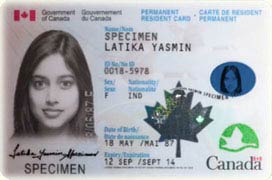
Renewing a Permanent Residence Card


I thought when I first arrived in Canada that I would only have one Permanent Residence card. When I arrived in August of 2011, there was only a three-year residency requirement in order to apply for citizenship and then maybe a year wait until the test and then, once a citizen, I wouldn't need the card.

Harper sort of mucked that plan up for me and a lot of other permanent residents. My card expires early next year (I got it late after an administrative foul up), but I am within the 270-day renewal window, so I thought it was best to take care of it.

Renewing your permanent residence is a pretty straightforward process. There is an application form to fill out, IMM5444, Supplementary Identification form IMM5445 and a pretty reasonable list of accompanying documents.  For most residents, the hardest part of the list will be documenting their visits outside of Canada for more than a single day. In order to maintain permanent residence status you must meet a residency requirement. You cannot be absent from the country for more than 1095 days over five years - you must live in Canada for at least two full years in a five year period.

You need to provide a list of every absence from the country - when you departed, when you returned, where you went and the purpose of the travel. Days out of the country with  a family member who is a citizen do not count towards the number of days out of the country. Other exceptions are available that will not count against days outside of the country.

You will need to gather primary and secondary identity documentation, CRA tax assessments and have two new photos made (I had mine made at Shopper's Drug Mart).

I had most of the information at hand, still the process took me about six hours.

Don't wait too long before renewing your card as the processing can take up to 90 days and you don't want to be caught without a current card. You cannot get back into Canada from a foreign country without it.

This summer I will apply for citizenship and hopefully, this will be my last permanent residence card!

Online resources:

http://www.cic.gc.ca/english/information/pr-card/apply-replace-pr-card.asp
  

Tuesday, October 20, 2015

Don't let the door hit you on the way out - Canada says goodbye to the Harper government

As you can see, the way out is to the Right!

How many clichés can I site? It's morning in Canada. Our long national nightmare is over. History judges us all. Hope is better than fear. Hold on there - I sound like the NDP!

Last night, Canada said goodbye to Stephen Harper's Conservative party in a big way, voting in a Liberal majority government under Justin Trudeau that ran a campaign based on a view of federal government as being activist for citizens, job growth and infrastructure investment.

Across the country, the election was a referendum on Harper: A leader who over nearly 10 years consolidated power from Parliament and the cabinet into his own seat of power in the Prime Minister's Office (PMO). Harper was the sole spokesperson for his party - he muzzled MP's in an anti-democratic push to create a federal government with a single point of view - his own.

Harper tried to create a Canada that was non-inclusive, uninformed, complacent and ignorant of the actions of its own government, He did this through the defunding of Stats Canada, elimination of the long form census, defunding of science and research and the cutting of government services to the most needy.

In order to balance his budget and allowing himself to look fiscally responsible in the run up to this election, Harper's government failed to spend federal dollars in critical areas of their responsibility; slowing immigration, limiting access to government services and stalling the economy. Harper's policies and actions were always targeted to his base. He was the first Canadian Prime Minister to run a nearly continuous election campaign for 10 years. Everything he did seemed aimed at insuring his chances in the next election with his so-called "old stock" Canadians, whenever that election was.

On the immigration and citizenship front, Harper chronically understaffed and underfunded the CIC, delaying the processing of immigration applications and increasing wait times for permanent residence and citizenship. More sinisterly, the PMO inserted itself politically in the work of the CIC, asking to review certain files for Syrian refugee claimants.

I am proud of Canadians. We finally stood up to say "enough". We finally showed this despot the door. We do believe in a Canada that is inclusive, not exclusive. We believe in a Canada that has a transparent, not opaque federal government. We believe in a Canada that supports the sciences and the arts. We believe in a Canada that invests in infrastructure. We believe in a Canada that supports the most needy with food, housing and healthcare.

Goodbye, Stephen Harper. The forthright American in me would like to say, with a very un-Canadian bluntness, you will not be missed. You were terrible for this country. You reaped what you have sown. Enjoy the harsh judgement of history as the most oppressive, anti-democratic PM in Canadian history. You've earned it.  


Thursday, January 15, 2015

Thank you and goodbye for now

Since April of 2005 I have shared with all of you my Canadian immigration experience, as well as commentary on the politics of immigration, Canadian culture, and since I became a permanent resident, settlement issues and concerns. Now, nearly 10 years, and just shy of 600 posts later, it's time to step away from this blog, at least for a little while; to recharge my batteries, to figure out where I can best serve you in the years ahead.

In the time I've been writing for you, many of you have taken the time to let me know how I've helped you, what you've gained from these posts, and what would help in the future. I hope I've done right by you. Thank you for your feedback.

To those of you who have purchased my books: Thank you. I hope they have helped you in your immigration applications. Part of the work I will be doing in the near future is to update these books to reflect the current immigration reality.

This isn't farewell, just goodbye for now. Please don't hesitate to drop me a note if you have questions, or comments and thank you again for your support over the last decade.

You have seen me through my immigration experience, and I can only hope I've given you solid information, encouragement and most of all, hope in your great future.

Canada is waiting for you. Come join us.

Tuesday, December 30, 2014

Happy Holidays from Canada

2014 wasn't the most eventful year on the immigration front in Canada, but 2015 is shaping up to be a game changer. The biggest change of course will come with the Expression Of Interest program. This will impose a major change not in the application process for skilled workers, but in the actual chances a skilled worker has for immigrating to Canada.

Where Canada has historically had a first-come-first-served approach to immigration in all classes, it is moving toward a very selective, and therefore highly political approach that will bring the "most qualified" to the front of the line - even if they just got in line yesterday. While this approach is currently limited to economic immigrants, don't think for a minute that it wont come to apply to all classes of immigration.

In the future, who knows? Even reunification of families may be prioritized by which families might be more economically successful as immigrants in the government's eyes.

Outside of the immigration front, and on a more personal note, 2014 finds me fully settling in to my Canadian life. America is becoming a crazy memory, where my only remaining concerns are with friends and family. What goes on there - fair or unfair, just or unjust - only matters to me to the extent that it impacts those I love. Beyond that, living in Canada has confirmed what I've long felt about my home country: there's something fundamentally wrong with the United States.

For those seeking to immigrate to Canada, I wish you the best in 2015. More than ever it will be important for you to understand the program options available to you and to seek out qualified advice on the path you set out on. Canada is likely to welcome more immigrants than ever in 2015 - mainly because it's a year in which we will see a federal election, and the Tories are going to want to play the immigrant card has strongly as they can. But to be one of the lucky ones who get through the red tape, be sure you are informed, proactive, and consistent in your immigration strategy.

Have the happiest of New Years and God bless you all, my faithful readers!  

Wednesday, November 12, 2014

The Globe and Mail - Cold-weather courses break ice for immigrants new to Canadian winters

It's coming, and it's beautiful - Winter in Montreal.
...Each year, Canada throws out a welcome mat to thousands of immigrants. And for many months of the year, that welcome mat is encrusted in snow. So some new Canadians turn to courses like Ms. Perrotte’s: a survival guide to winter.

For 90 minutes, Ms. Perrotte tries to dispel some myths and inspire some enthusiasm about Canada’s most emblematic season, running through a cold-weather curriculum which includes windchill and weather-stripping, tobogganing and the Bonhomme Carnaval.

The session in winter preparedness is part practical. It’s also, fundamentally, about learning to become a Canadian.

Read the rest of the article here

Monday, October 13, 2014

The Globe and Mail - Canada-U.S. drifting apart? Blame America


The Nanos poll revealing growing divergence of views between Canadians and Americans should not surprise anyone. But Canada is not to blame for the fact that we are drifting apart on so many issues, as some allege. Partisan sniping, or the well-known proclivity of Canadians to blame themselves when things sour – our ingrained apologist streak – should not blind us to reality. Canadians must wake up to what many of America’s erstwhile allies learned much earlier: The Obama Administration is one of, if not the weakest U.S. administrations on record in terms of global leadership and constructive bilateralism. That, together with a polarized, dysfunctional Congress and, more generally, an America that is turning inwards are among the reasons why the neighbourhood ardor is waning. And it is not simply Canadians who feel that way. Our Mexican friends feel jilted on immigration and border security, two issues that matter greatly to them. So too do America’s allies across the Atlantic and Pacific oceans whose profound sense of frustration with an America in retreat is palpable.

Read the rest here

Sunday, October 12, 2014

Happy Thanksgiving

The year rolls on and here we are again at Thanksgiving time in Canada. While I will not be home (in the U.S. for a couple more days, still), I called my family in Canada to wish them a blessed day and year ahead. I can tell I'm becoming more and more Canadian with each year when I come to think of Thanksgiving in October, rather than November as it is in The Old Country.

I celebrate both Thanksgivings though, and will continue to.

You can't be too thankful after all!

Tuesday, October 07, 2014

it's official - I've lost touch with the U.S.

Two weeks into my latest visit to 'The Old Country" and I have to say, the overwhelming feeling I am having about the U.S., home, and everything here is that I've lost touch with it. The issues that matter to family and friends don't ring with me; I've lost track of changes around me; but the saddest thing is the state of friends and family.

Most of my friends and family know I only come home a few times a year at best, and know in advance when I'm coming. But I guess leaving is leaving, and they don't seem to make much effort when I'm back to see me. Only my closest friends (count them on a few fingers of one hand) reach out to me when they know I'm coming home.

Maybe it's more of a reflection of how I lived my life when I was here than anything else. Maybe I have a faulty, romantic memory that we were all closer than I believed? I understand that everyone lives their own life, and gets on with it; maybe the issue is I wanted to believe I mattered more than I do. I guess everyone wants to feel that way though.

So, save for my closest family and a couple friends, I might as well not be home at all. Maybe in the future I wont bother to let anyone know I'm coming back. As it is, I mainly feel like a ghost, haunting my old neighbourhood, making sounds no one can hear.

Friday, September 26, 2014

Back in the U.S. - Fall 2014 edition

It started on the flight from Buffalo to Chicago. The American sitting next to me was on her way to Paris. "This is my last international flight." she told me. "With those bombings today and the terror alerts, it's just not safe..." What bombings? I asked myself. Terror alerts?

When I landed in Chicago, the TV monitors turned onto CNN told me that the bombings she was talking about had been carried out by the U.S. in Syria. WE had bombed THEM. The terror alerts? Well, when you bomb someone, they tend to get a little upset about it.


Then I listen to the news commentary, and a word has entered the vocabulary of the press that to me is a little disturbing - a little Orwellian.

The U.S. press has followed the government lead like good little propagandists and now refers to the U.S. as "The Homeland". When I hear this term, all that comes to mind is Hitler on a podium, spewing about "der faderland". Protect The Homeland: Threats to The Homeland... Am I the only one who is bothered by this?

So here I am, a few hours into my U.S. visit, and I am not only in another country; I am literally in another world. The U.S., as I see it, is a country living in a perpetual state of fear, involved in a never-ending state of war on an enemy that is not a nation, but instead a political philosophy. And this fear, and this war, keeps the population from noticing how everything that should matter to their own well being is being stripped from them.

And the population drinks the Kool Aid of distraction. They will debate for hours about al-Qaeda (sorry, I meant ISIS), and Ferguson, and the latest mass shooting...all while they go without healthcare, millions live in poverty, bankers get richer after breaking the law, and since 2002, the United States has had the highest incarceration rate in the world.

I thank God every day that I am only visiting the country. I will never live here again.

You people are crazy.

Monday, September 15, 2014

Violence in Toronto - it's personal

All in all, Toronto is a very safe city. I can't really say that there are neighborhoods that I avoid or fear to be in at any hour of the day. In my three years here, "random" acts of violence seem to be very rare.

There is a particular form of violence that was new to me, however. Stabbings. Because of two conditions, it seems stabbings happen almost as frequently as shootings. I think the two reasons are: Gun control in Canada is pretty rigorous and violence is personal.

It's hard to get a gun in Canada in general. Handguns in particular (the favourite guns of the U.S.) are hard to come by legally, which makes them extremely expensive illegally. There aren't many around, so they aren't the weapon of choice. As I noted before, violence is less random here, and more about one person's direct conflict with another. It's personal. And stabbing someone is a very personal act. You can't stab someone from 20-yards; you have to get right up on them to accomplish it.

So while you do hear about shootings here, there really aren't many (and for the population in city of around 2.1 million, there are only around 140-170 incidents each year, 20 of which resulting in death). The total number of stabbings in Toronto each year isn't publicly noted, but deaths from stabbings take 40-60% of the same number of lives as shootings when all is said and done.

So Canada has its share of violence. And in general, it's personal. While no violence is something I'm sure we'd all be happier with, knowing that the random violence of the U.S. just isn't prevalent here does make this country a safer one to live in, and another reason I am thankful to live in Canada.    

Friday, September 12, 2014

A sense of home


In Seattle, where I come from, "home" was the house I shared with my brother and our dogs. I felt at home when I was there. The neighbourhood, the city, Seattle, was "the city". Home city, but not "home"

Here in my new Canadian life, Toronto - the whole city, feels like home to me. I was wondering why this was. As I was walking this morning in the College Park neighbourhood, then later in the St. Lawrence Market/Old Town neighbourhood where I live I think I figured it out.

In the U.S. I drove everywhere. If something I needed was more than a few blocks away - and I mean two blocks away, I'd hop in the car to go there. It's a very American way to get around. We love our cars. But getting in a car isolates you from everyone and everything. You forget what the area just a few blocks away looks like or smells like, or what's on this corner and who lives on that corner...

In Toronto, we don't have a car. We walk or take transit (primarily the subway) everywhere. I am in connection with the city everywhere I go. I have to pay attention. I see it at walking speed, not in the blur of driving speed. I think because I experience Toronto in this way, the whole city feels like home to me - my connection to it is as broad as my walks - and in the city, a 45-minute walk to get somewhere is not all that exceptional. I would never walk 45-minutes to somewhere in the U.S. Don't ask me why, but it just doesn't make sense.

I love this broader sense of where "home" is. I love being in Canada and with my love in Toronto. 

Tuesday, September 02, 2014

First day of school

Labour Day is past. The CNE is closed. Thunderstorms have returned. It must be the first day of school.

This morning CP24 (a local tv station) had parents send in pictures of their kids in their back-to-school outfits and it was just classic. Some excited girls, showing off their new fashions with big smiles on their faces. And then there were the boys who looked put together, but who's eyes betrayed an "are you kidding? Summer's over?" sentiment.

A teacher friend of mine told me how other teachers were calling and texting each other yesterday, asking, "are you ready for this?" Their 9-month countdown begins today.

Construction workers are racing to get those tasks that the coming cold wont bear out of the way too - though there isn't a lot they can't do in even the bitterest of cold.

So happy first day of school from Toronto. How did you spend yours? 

Friday, August 29, 2014

The end of summer

Night time at the CNE
We haven't really had a summer in Toronto this year. Tomorrow promises to bring only the second Heat Warning of the season, where normally we'd have at least a week or two worth of them.

Because the season never really kicked-in weather-wise, I didn't feel as strongly about getting out to the numerous summer festivals: Waterfront Festival, Taste of the Danforth, World Pride, Taste of Asia, Taste of Lawrence (plenty of food festivals, as you can tell!), Caribbean Carnival; Buskerfest and don't forget the Canadian National Exhibition...There are a lot of things to do every weekend.

Maybe my experience last fall of the Nuit Blanche festival coloured my thinking a bit too. During the festival, which runs one night in October from 6PM until 6AM, streets are closed down and interactive art displays are erected. Attendance last year - meaning people flooding the streets of Toronto - was 1 million people. I went out in it. It was crazy. I went to Nathan Phillips Square for a Ai Wei Wei installation. Trying to get through the square was an exercise in having your genitals introduced to 50,000 strangers. Not fun.

I'm going to try and get into the spirit of the festivals again though. May even hit the CNE this weekend. I love the activity in this beautiful city. I need to participate.      

Wednesday, August 27, 2014

Crossroads - how should this blog continue?

Hi Readers,
I'm at a crossroads with your favourite immigration blog. Not quite sure how, or if I should continue to write on these big immigration matters, transition this to more of a "life in Canada" or "life in Toronto" blog, or simply call it a day after almost 10 years?

Any thoughts?

I'll let you know my conclusion soon.

- JH

Monday, August 11, 2014

Three years in Canada!

As of August 12, 2014, I mark my third year and the start of my fourth in Canada.

Has it passed so quickly? Yes it has. I pinch myself often: Three years as a permanent resident. All and all, it's been pretty wonderful. This is my home. This is my country.

I am content. Am I still adjusting? Absolutely. Do I miss the U.S.? Sometimes. It's mainly family that I miss, and dear friends. But that's the emmigrant's lot in life, and the path I chose. I'm still glad I chose it.

They say time flies when you're having fun, and there's not a lot to say when life is good.

Time is flying. There's not a lot to say.

Wednesday, June 25, 2014

The Globe and Mail - Scrapping TFW program for low-wage jobs will be on the table in 2016, Kenney says

They never really cared about you...When the political potato becomes too hot, the Tories always bail. Kenney was a huge champion on the Temporary Foreign Worker (TFW) program when he was Immigration Minister. He showed up at every ethnic event possible. He was your best friend.

Then word got out that the TFW program was naturally being abused by a few big corporations. So who gets thrown under the bus? The workers themselves. Remember this next time you get a chance to vote (that's for all you immigrant citizens in the blogosphere).

The elimination of the Temporary Foreign Worker Program for low-wage jobs will be on the table in 2016, says Employment Minister Jason Kenney, who is not backing down in the face of business criticism that the Conservative government is already going too far.

From the Canadian Meat Council to the Canadian Chamber of Commerce, business groups are speaking out against Ottawa’s latest plan to cap the number of low-wage foreign workers and impose higher fees.

Read the rest of the article here


Tuesday, June 24, 2014

The Star - Canadian government’s citizenship bill faces legal challenge

Canadian and international rights groups are poised to launch a legal challenge against Ottawa’s proposed citizenship law, saying it would create two classes of citizens and violate the Charter’s mobility rights.

Under the “Strengthening Canadian Citizenship Act,” they say, no one is safe from having their citizenship revoked, even those who were born in Canada if they have the right to dual citizenship in another country because of their immigrant ancestry.

“The new provisions for revocation of citizenship in Bill C-24 violate Canada’s international human rights obligations. They are divisive, discriminatory, retrograde and profoundly unfair,” Amnesty International 

Canada secretary general Alex Neve told a teleconference Thursday.

“The bill buys into and promotes a xenophobic and false narrative about true Canadians and others, a narrative that equates foreignness with suspicions.”

Read the entire article by Nicholas Keung here

Thursday, June 05, 2014

The Star - Canadian health care better than Obamacare

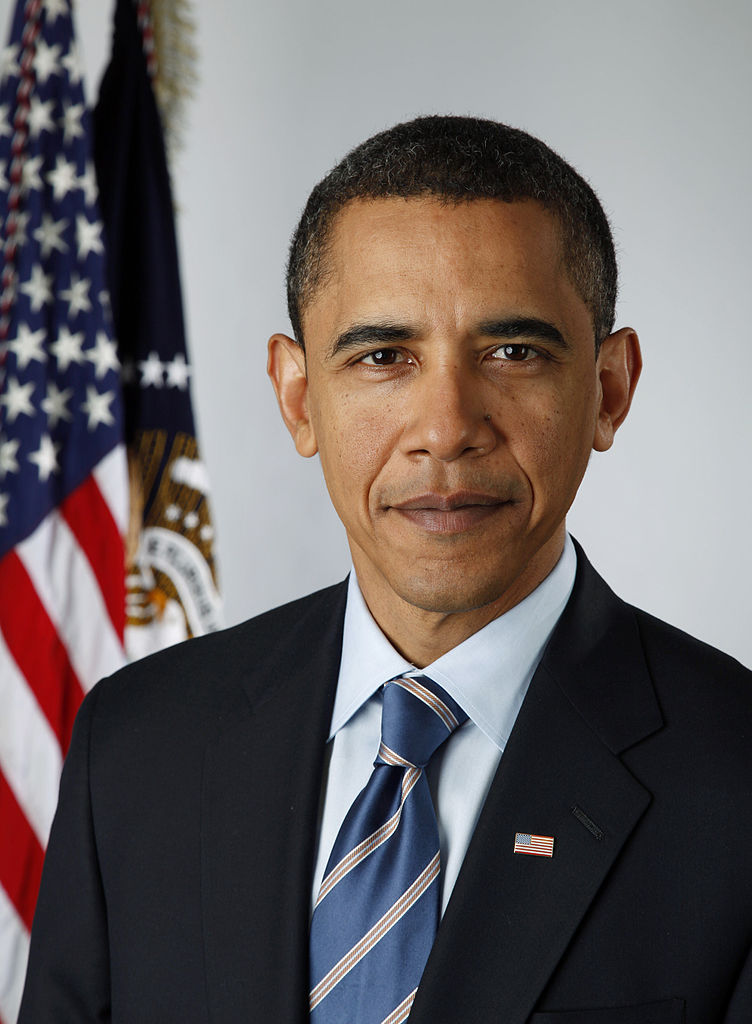
U.S. President, Barrack Obama
I can't come home to the U.S. without hearing about Obamacare, and how great it is for America. My position: it's a poor compromise for the citizens of America. That a country so rich cares so little for the health of its citizens reeks of a social Darwinism that is evident in almost every aspect of the society. Below is an article from the January 12, 2014 Toronto Star. After hearing all the nonesense praise for Obamacare, I felt it was important to reflect this comparative viewpoint in its entirety:

---

Ralph Nader points to 22 ways the Canadian health-care system is better than Obamacare in the U.S.


Political activist Ralph Nader recently outlined the advantages of Canada’s medicare system over so-called Obamacare in the United States to an audience at Western University in London, Ont.:

Dear America:
Costly complexity is baked into Obamacare. No health insurance system is without problems but Canadian-style single-payer full medicare for all is simple, affordable, comprehensive and universal.

In the early 1960s, President Lyndon Johnson enrolled 20 million elderly Americans into medicare in six months. There were no websites. They did it with index cards.

Here are 22 ways the Canadian health-care system is better than Obamacare.

Love, Canada

No. 22: In Canada, everyone is covered automatically at birth — everybody in, nobody out.

In the United States, under Obamacare, 31 million Americans will still be uninsured by 2023 and millions more will remain underinsured.

No. 21: In Canada, the health system is designed to put people, not profits, first.

In the United States, Obamacare will do little to curb insurance industry profits and will actually enhance insurance industry profits.

No. 20: In Canada, coverage is not tied to a job or dependent on your income — rich and poor are in the same system, the best guarantee of quality.

In the United States, under Obamacare, much still depends on your job or income. Lose your job or lose your income and you might lose your existing health insurance or have to settle for lesser coverage.

No. 19: In Canada, health-care coverage stays with you for your entire life.

In the United States, under Obamacare, for tens of millions of Americans, health-care coverage stays with you for as long as you can afford your share.

No. 18: In Canada, you can freely choose your doctors and hospitals and keep them. There are no lists of “in-network” vendors and no extra hidden charges for going “out of network.”

In the United States, under Obamacare, the in-network list of places where you can get treated is shrinking — thus restricting freedom of choice — and if you want to go out of network, you pay for it.

No. 17: In Canada, the health-care system is funded by income, sales and corporate taxes that, combined, are much lower than what Americans pay in premiums.

In the United States, under Obamacare, for thousands of Americans, it’s pay or die — if you can’t pay, you die. That’s why many thousands will still die every year under Obamacare from lack of health insurance to get diagnosed and treated in time.

No. 16: In Canada, there are no complex hospital or doctor bills. In fact, usually you don’t even see a bill.

In the United States, under Obamacare, hospital and doctor bills will still be terribly complex, making it impossible to discover the many costly overcharges.

No. 15: In Canada, costs are controlled. Canada pays 10 per cent of its GDP for its health-care system, covering everyone.

In the United States, under Obamacare, costs continue to skyrocket. The U.S. pays 18 per cent of its GDP and still doesn’t cover tens of millions of people.

No. 14: In Canada, it is unheard of for anyone to go bankrupt due to health-care costs.

In the United States, under Obamacare, health-care-driven bankruptcy will continue to plague Americans.

No. 13: In Canada, if you lose your job, you don’t lose your health insurance.

In the United States, you will often hear people say, “I hate my job, but I can’t leave it because I’ll lose my health insurance.” Or people will be forced to get a job they hate just for the health insurance.

No. 12: In Canada, simplicity leads to major savings in administrative costs and overhead.

In the United States, under Obamacare, complexity will lead to ratcheting up administrative costs and overhead.

No. 11: In Canada, when you go to a doctor or hospital the first thing they ask you is: “What’s wrong?”

In the United States, the first thing they ask you is: “What kind of insurance do you have?”

No. 10: In Canada, the government negotiates drug prices so they are more affordable.

In the United States, under Obamacare, Congress made it specifically illegal for the government to negotiate drug prices for volume purchases, so they remain unaffordable.

No. 9: In Canada, government health-care funds are not profitably diverted to the top 1 per cent.

In the United States, under Obamacare, health-care funds will continue to flow to the top. In 2012, CEOs at six of the largest insurance companies in the U.S. received a total of $83.3 million in pay, plus benefits.

No. 8: In Canada, there are no necessary co-pays or deductibles.

In the United States, under Obamacare, the deductibles and co-pays will continue to be unaffordable for many millions of Americans.

No. 7: In Canada, the health-care system contributes to social solidarity and national pride.

In the United States, Obamacare is divisive, with rich and poor in different systems and tens of millions left out or with sorely limited benefits.

No. 6: In Canada, delays in health care are not due to the cost of insurance.

In the United States, under Obamacare, patients without health insurance or who are underinsured will continue to delay or forgo care and put their lives at risk.

No. 5: In Canada, nobody dies due to lack of health insurance.

In the United States, under Obamacare, many thousands will continue to die every year due to lack of health insurance.

No. 4: In Canada, an increasing majority supports their health-care system, which costs half as much per person as in the United States.

In the United States, a majority — many for different reasons — oppose Obamacare.

No. 3: In Canada, the tax payments to fund the health-care system are progressive — the lowest 20 per cent pays 6 per cent of income into the system while the highest 20 per cent pays 8 per cent.

In the United States, under Obamacare, the poor pay a larger share of their income for health care than the affluent.

No. 2: In Canada, the administration of the system is simple. You get a health card when you are born. And you swipe it when you go to a doctor or hospital. End of story.

In the United States, Obamacare’s 2,500 pages plus regulations (the Canadian medicare bill was 13 pages) is so complex that then-speaker of the House Nancy Pelosi said before passage: “We have to pass the bill so that you can find out what is in it.”

No. 1: In Canada, the majority of citizens love their health-care system.

In the United States, the majority of citizens, physicians and nurses prefer the Canadian-type system — single-payer, free choice of doctor and hospital, everybody in, nobody out.

Thursday, May 22, 2014

ADAMS, MACKLIN AND OMIDVAR - Citizenship Act will create two classes of Canadians

"Consider this scenario: A foreign student completes her master’s degree here in three years. She wants to stay in Canada – and is just the kind of highly skilled immigrant Canada needs – but she’s not eligible to apply for permanent residence yet. First, she must find suitable employment and work for a year. Having done so, she applies for permanent resident status, which takes another year to process. She has now been in Canada for five years, but none of it counts toward the four-year permanent residency requirement. Under the old rules, she would have received partial credit for years lived in Canada as a temporary resident. No more.

She is now a permanent resident, just at the starting line of the four years she must spend in Canada to apply for citizenship. Her Canadian employer asks her to work in one of its overseas offices (perhaps to take advantage of her language skills and cultural knowledge). But under the new rules any time spent outside Canada will further delay her eligibility for citizenship and could even jeopardize her permanent residence. She refuses the career opportunity.

Four years later, she has fulfilled her permant residence requirement and applies for citizenship. Based on existing delays (the result of staff shortages, not law), she will have to wait about two years before her application is processed. She’s been here for eleven years, six of them as a permanent resident. Only now can she call herself “Canadian” and vote for the representatives that collect her taxes and make decisions that affect her life."

Read the excellent, entire article here

Tuesday, April 22, 2014

The Globe and Mail - After 40 years, Immigrant Settlement Program needs an overhaul

Robert Vineberg is a Senior Fellow at the Canada West Foundation. He was formerly Director General of Citizenship and Immigration Canada’s Prairies and Northern Territories Region. He is also the author of the book "Responding to Immigrants’ Settlement Needs: The Canadian Response".

Would-be immigrants to Canada continue to face a series of bureaucratic impediments that either delay their status or reduce the effectiveness of integration once they arrive here. Fixing these problems is long overdue.

Read more